
Special Features
From Glory to Struggle: The untold story of Calabar Rovers FC


Once a symbol of pride for Cross River State, the story of Calabar Rovers Football Club is a fascinating chronicle of ambition, growth, setbacks, and survival in Nigerian football.
Founded in 1977 in the historic city of Calabar, the capital of Cross River State, the club was established with the vision of making a mark in the Nigerian football scene.
The team’s foundation was spearheaded by Paulo Luiz Campos, a renowned Brazilian football coach whose expertise was instrumental in shaping the club’s identity and style of play.
From its inception, Calabar Rovers was branded as a face of Cross River State football, carrying the hopes of the state on its shoulders.
The club’s home base, the iconic U.J. Esuene Stadium, became its fortress, hosting not only training sessions and matches but also serving as a rallying point for football enthusiasts in the region.
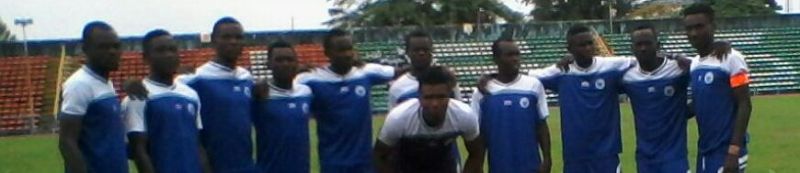
Early Rise to Glory
Two years after its formation, in 1979, Calabar Rovers was officially registered as a team in Nigeria’s Second Division.
The club quickly earned respect for its organized structure and bold, attacking style of play.
In an era when Nigerian football was dominated by teams from Lagos, Enugu, and Kano, the Calabar side carved out a niche with a disciplined squad and tactical efficiency.
By 1981, just two years after entering competitive football, Rovers had achieved promotion to the top flight, a remarkable accomplishment that placed them among Nigeria’s elite football clubs.
At its peak, Calabar Rovers was a name that commanded admiration, boasting passionate fans and talented players.
The club’s reputation was further enhanced when it reached the semi-finals of the Football Association Challenge Cup, Nigeria’s most prestigious football tournament at the time.
However, this moment of glory was followed by a long struggle for survival as the club failed to replicate its early successes.
Years of Decline
By 1993, Calabar Rovers’ glory days began to fade as the club was relegated from the top division.
The years that followed were marked by inconsistency, financial struggles, and dwindling support.
For decades, they failed to win major trophies or achieve any significant milestones, losing their dominance to newer, better-funded clubs across Nigeria.
The decline deepened in 2006 when Rovers faced one of the most humiliating defeats in Nigerian football history.
On August 12, 2006, the club suffered a shocking 13-0 loss to Akwa United, a result that effectively sealed their demotion.
The crushing defeat was symbolic of a team that had once soared high but was now struggling to stay afloat.
A Brief Resurgence
In 2008, a glimmer of hope appeared when the United Cement Company (UNICEM) stepped in to sponsor the club. Backed by government support, Calabar Rovers made a comeback, participating in the 2008/2009 Nigerian National League season under the new name UNICEM Rovers Football Club.
For five seasons, UNICEM’s support kept the team alive and competitive, even as they battled financial challenges.
In 2009, the club made a strategic move by acquiring Dankat FC’s league slot through a ₦12 million agreement, allowing Rovers to participate in the northern division of the league.
Though the arrangement gave them an opportunity to remain active, the team’s performance failed to meet expectations, and they remained far from their former glory.
Financial Woes and Player Protests
By 2015, Calabar Rovers’ financial instability became public knowledge.
Players went unpaid for months, accumulating debts from unpaid salaries and allowances.
In frustration, the squad staged a protest in front of the Cross River State governor’s office, demanding their dues as preparations for the 2016 Nigerian National League season were already underway.
The incident highlighted the harsh realities faced by many Nigerian clubs struggling to stay afloat in a system plagued by poor funding and mismanagement.
The Armed Robbery Incident
As if financial struggles were not enough, Rovers endured a terrifying ordeal in 2016 while traveling to honor a league match against Go Round FC of Omoku, Rivers State.
According to Sports Vanguard, their bus was ambushed by a 15-man armed robbery gang, leaving the team traumatized.
The robbers assaulted the chief coach and driver before making away with bags containing jewelry, playing kits, and other valuable items.
This harrowing experience was a stark reminder of the challenges Nigerian football teams face, both on and off the pitch.
A Fallen Giant
Today, Calabar Rovers’ story serves as a cautionary tale of how financial instability, poor planning, and lack of support can bring down even the most promising teams.
From being one of Nigeria’s most respected clubs to suffering humiliating losses and violent attacks, Rovers’ journey reflects the struggles of many football institutions across the country.
The club that once symbolized hope for Cross River State football has been reduced to a shadow of its former self, but its rich history remains a source of inspiration.
With better investment, visionary leadership, and grassroots support, there is hope that Calabar Rovers could one day rise from the ashes and reclaim its place among Nigeria’s football greats.
Current State: A Determined Climb
Today, Calabar Rovers compete in the Nigeria National League (NNL), the country’s second division.
Their standings in the 2024–25 season offer a nuanced but hopeful picture:
As of April 2025, Rovers sat 4th in their group, following a hard-fought 1–0 home win against Osun United.
However, inconsistency remained an issue: they suffered a 3–2 defeat to Madiba FC in mid-May, despite holding a respectable position in the standings.
Encouragingly, later in May, they rebounded with a 2–1 victory over Gateway United, climbing as high as 2nd place.

A goalless draw with table leaders Kun Khalifat FC kept them in 4th position, confirming that while competitive, promotion remains a steep climb.
Backing their on-field push are efforts off it: in April 2024, Cross River State Governor Bassey Otu doubled the club’s subvention from ₦5 million to ₦10 million, and pledged a new team bus, signaling renewed government investment.
Under Technical Adviser Caleb Esu, formerly of Nigeria’s U-20 coaching setup, the club is aiming to restore its former prominence.
Esu emphasizes reclaiming the legacy of 1980s and ’90s Rovers and has spearheaded scouting initiatives to strengthen the squad.

Tielemans’ extra-time penalty completes stunning Belgium comeback against Senegal

Morocco beat Netherlands on penalties to reach World Cup last 16 after dramatic comeback

Germany crash out as Paraguay win dramatic penalty shootout to reach World Cup last 16

Martinelli’s last-gasp strike sends Brazil into World Cup last 16

Ronaldo fails to match rivals’ World Cup heroics as Portugal held by DR Congo

Kane double and Bellingham brilliance fire England past Croatia in World Cup opener

BREAKING: Messi scores first ever world cup hat-trick to become the highest goalscorer surpassing Miroslav Klose

Haaland double powers Norway past Iraq in World Cup opener

Mbappe breaks France scoring record as Les Bleus defeat Senegal in World Cup opener

Kamada’s late heroics earn Japan draw against Netherlands in World Cup opener

Havertz scores brace as Germany put seven past World Cup debutants Curacao
