
Football
Why football managers are sacked faster than ever: The modern game’s ruthless reality


Football has never been more unforgiving. In an era driven by instant results, global scrutiny, and billion-dollar investments, the margin for error for managers has shrunk dramatically, Sport360NG reports.
The latest example is Liam Rosenior, whose time at Chelsea FC lasted just over three months before he was dismissed following a disastrous run of results. Chelsea lost seven of their last eight matches and endured a historic goal drought, forcing the club into decisive action.
Rosenior’s sacking is not an isolated case, it is part of a growing trend that reflects how modern football has evolved into a high-pressure, high-risk environment for managers.
The New Reality: Results Over Reputation
In previous decades, managers were afforded time to build squads and philosophies. Today, patience is almost extinct.
Clubs now operate as global brands with massive financial stakes. A poor run of form is no longer just a sporting issue, it becomes a commercial crisis. Missing out on European qualification or relegation can cost clubs millions.
This urgency explains why nine Premier League managers have already been sacked during the 2025/26 season, with some clubs changing coaches multiple times.
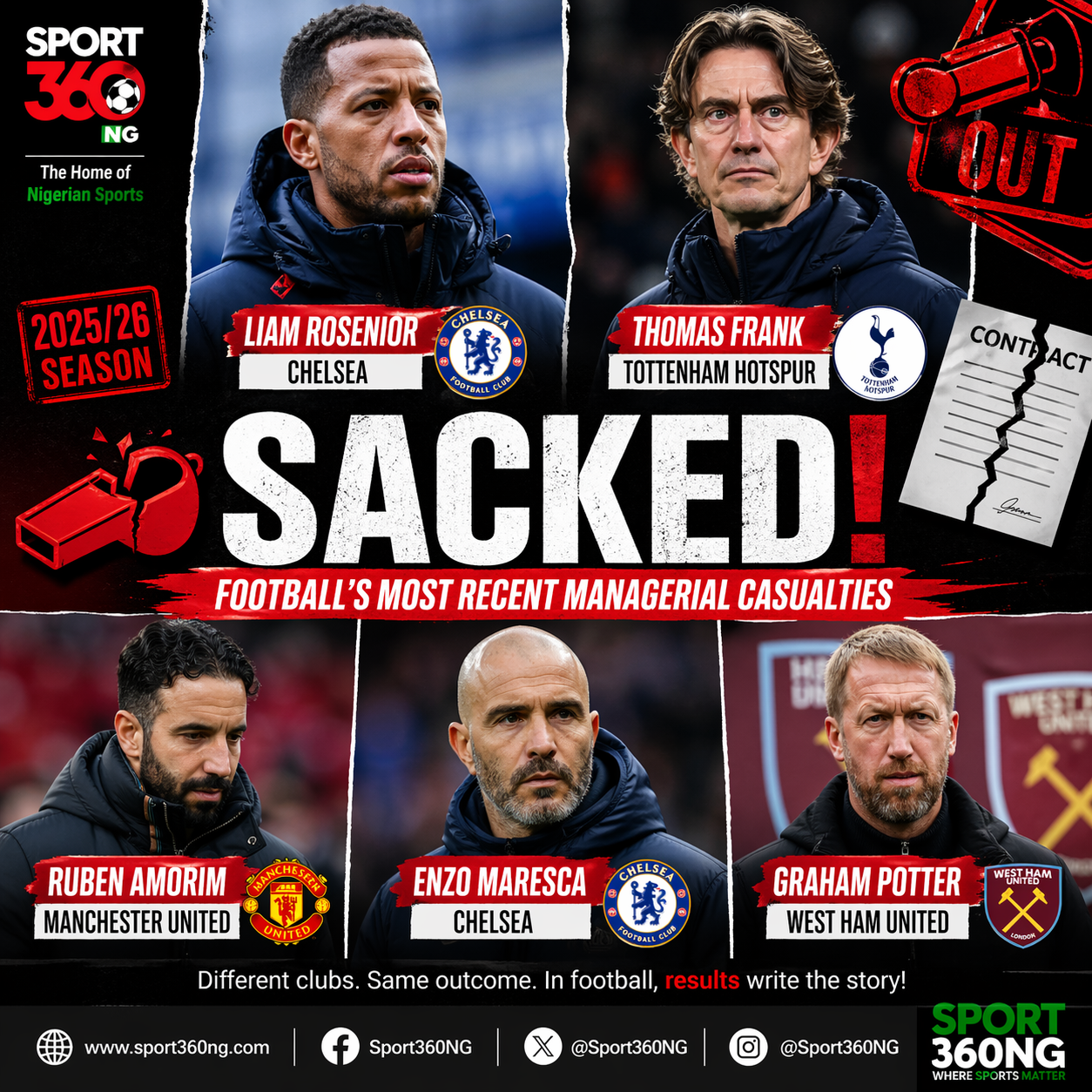
Top 10 Recent Managerial Sackings (Modern Era Snapshot)
Here’s a current and relevant list of high-profile managerial casualties highlighting the speed and frequency of sackings:
1. Liam Rosenior – Chelsea (2026)
Sacked after just 106 days following a historic goal drought and poor results.
2. Enzo Maresca – Chelsea (2026)
Dismissed earlier in the same season as part of Chelsea’s instability.
3. Ruben Amorim – Manchester United (2026)
Failed to meet expectations at a high-pressure club.
4. Thomas Frank – Tottenham (2026)
Lost his job amid inconsistent performances.
5. Sean Dyche – Nottingham Forest (2026)
Dismissed as relegation fears intensified.
6. Graham Potter – West Ham (2026)
Sacked after failing to deliver expected progress.
7. Vítor Pereira – Wolves (2026)
Another casualty of poor league form.
8. Nuno Espírito Santo – Nottingham Forest (2025/26)
Early-season dismissal highlighting impatience.
9. Erik ten Hag – Manchester United (2024)
Sacked after inconsistent results despite prior success.
10. Patrick Vieira – Genoa cfc (2024)
Dismissed after a poor run without wins.
Why Managers Are Sacked So Quickly Today
1. Financial Pressure Has Skyrocketed
Modern football is driven by revenue streams, TV rights, sponsorships, and Champions League qualification. A dip in performance threatens all of these, forcing boards to act quickly.
2. Player Power and Dressing Room Dynamics
Managers today must manage egos as much as tactics. Reports around Rosenior suggested dressing room tension played a role in his exit. Once a manager “loses the dressing room,” recovery is rare.
3. Data and Analytics Intensify Scrutiny
Every tactical decision is now dissected through data. Clubs can quickly identify decline trends, often before fans even notice.
4. Social Media and Fan Pressure
Fan reaction is immediate and global. Hashtags calling for a manager’s dismissal can trend within hours, increasing pressure on club owners.
5. Short-Term Ownership Models
Many clubs are now run by investors expecting quick returns. Long-term projects are often sacrificed for immediate results.
6. Fixture Congestion Leaves No Recovery Time
With domestic leagues, European competitions, and international breaks, managers have little time to fix problems before the next crisis hits.
Chelsea: A Case Study in Modern Instability
Chelsea’s recent history perfectly captures this trend. The club has cycled through multiple managers in quick succession, including both Enzo Maresca and Liam Rosenior in the same season.
Despite long-term contracts, poor results triggered swift dismissals, highlighting how contracts offer little protection in modern football.
Is This Trend Sustainable?
The rapid turnover raises serious questions:
Are clubs sacrificing long-term success for short-term fixes?
Does constant managerial change actually improve performance?
Or is it creating instability that harms players and development?
Evidence suggests that frequent sackings rarely guarantee success, but in today’s football economy, clubs are willing to take that risk.
Conclusion
Football management has become one of the most volatile jobs in sport. The sacking of Liam Rosenior is not just a headline, it is a reflection of a deeper shift in the game.
In modern football, time is a luxury few managers can afford.
And unless the culture changes, the cycle of quick hires and even quicker sackings will continue to define the sport.



Tielemans’ extra-time penalty completes stunning Belgium comeback against Senegal

Morocco beat Netherlands on penalties to reach World Cup last 16 after dramatic comeback

Germany crash out as Paraguay win dramatic penalty shootout to reach World Cup last 16

Martinelli’s last-gasp strike sends Brazil into World Cup last 16

Ronaldo fails to match rivals’ World Cup heroics as Portugal held by DR Congo

Kane double and Bellingham brilliance fire England past Croatia in World Cup opener

BREAKING: Messi scores first ever world cup hat-trick to become the highest goalscorer surpassing Miroslav Klose

Haaland double powers Norway past Iraq in World Cup opener

Mbappe breaks France scoring record as Les Bleus defeat Senegal in World Cup opener

Kamada’s late heroics earn Japan draw against Netherlands in World Cup opener

Havertz scores brace as Germany put seven past World Cup debutants Curacao
