Women Football
Mary Earps: The Goalkeeper Who Changed the Game and Refused to Be Changed by It

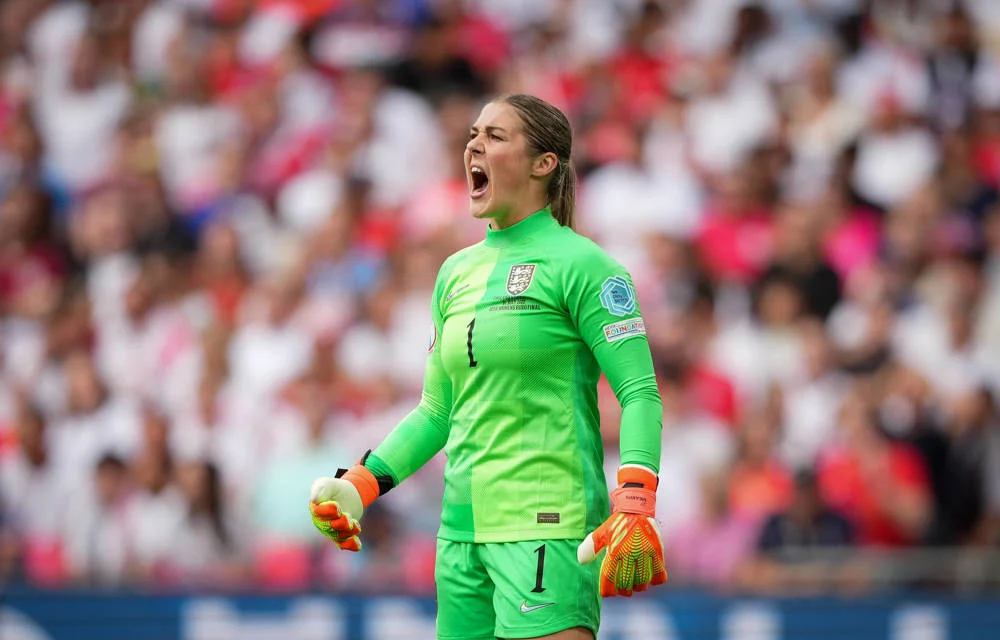
“She changed goalkeeping. She changed the game. But she hasn’t changed.”
Those words, spoken by former England striker Ellen White in the BBC Sport documentary Mary Earps: Queen of Stops, perfectly capture the paradox of one of football’s most compelling modern icons. Mary Earps may have stepped away from international football, but her influence is far from over. In fact, it’s only just beginning.
The story of Earps is not one of linear success. It’s a tale defined by struggle, sacrifice, and staggering resilience an odyssey from a part-time footballer scraping together a living to a global brand and vocal leader who has reshaped the conversation around women’s goalkeeping and mental health in sport.
Her retirement from the international stage this week, while surprising, offers the perfect moment to reflect on the woman who redefined her position, and in many ways, redefined what it means to be a modern-day athlete.
From Amateur Ranks to the WSL: A Path Paved by Perseverance
Earps’ love affair with goalkeeping began in Nottingham, during a youth game with West Bridgford Colts. After saving a penalty in her first match, her father quipped, “If one of the other girls had been in goal, they wouldn’t have saved that.” It was the kind of throwaway remark parents often make, but for Mary, it was everything. In that moment, her path was set.
The reality of that path, however, was far from glamorous. In the early days of her senior career, Earps navigated the rudimentary landscape of women’s football in England. When she made her WSL debut for Doncaster Belles in 2011, she earned just £25 per match. Between training and travel often three to five hours each way she held down six part-time jobs, working in a toy shop, cinema, and anywhere else that paid. All while trying to hold on to a dream that often seemed miles out of reach.
“My Wikipedia page looks colourful,” she once joked, referencing the numerous clubs she played for during her early career. But behind the humour lay a very real uncertainty: whether this journey would ever pay off.
By 2016, with a degree in Information Management and Business Studies from Loughborough University in hand, Earps stood at a crossroads. “I genuinely feared the infrastructure of women’s football wasn’t strong enough to sustain a career,” she said. But instead of taking a traditional job, she made the bold decision to bet on herself.
Rock Bottom and Redemption: A Career Nearly Cut Short
That self-belief would be tested to the core in 2020. After years of trying to break into the England setup, Earps was suddenly dropped by then-manager Phil Neville and she didn’t even get a phone call.
“I was scrolling through my phone on my lunch break when I realised I hadn’t been selected,” she recalled. “No message. No explanation. Nothing.” The impact was devastating. “I ended up on the kitchen floor in pieces. It felt like my world had ended.”
For many athletes, that might have been the end of the road. But Earps’ story was only just beginning. When Sarina Wiegman took over as England manager in 2021, everything changed. In a now-iconic moment captured in the Lionesses: Champions of Europe documentary, Earps snaps her fingers to describe the transformation: “Sarina came in and life changed. Just like that.”
At 28, after two years in international exile, Earps was handed a lifeline and she grabbed it with both gloves.
She returned to the national team with renewed purpose, transforming from a fringe player into one of the world’s finest shot-stoppers. Her performances during England’s victorious Euro 2022 campaign and their run to the 2023 World Cup final were nothing short of exceptional. In the final against Spain, she saved a crucial penalty, a moment that cemented her place in football history.
That same year, she was named FIFA’s Best Women’s Goalkeeper for the second time and won BBC Sports Personality of the Year a rare double in women’s sport.
Authenticity, Advocacy, and the Power of Voice
Yet Earps’ influence stretches far beyond the pitch. Throughout her career, she has used her voice to advocate for change sometimes at personal cost.
Perhaps the most high-profile example came in 2023 when sportswear giant Nike decided not to sell her England goalkeeper shirt ahead of the World Cup. The backlash was swift, led in part by Earps herself. Her refusal to stay silent sparked a petition that drew over 150,000 signatures and forced Nike into a dramatic U-turn.
“It wasn’t just about me,” she explained. “It was about what it said to young kids who look up to goalkeepers. That they don’t matter.”
For Earps, the issue was never just about merchandise. It was about representation and recognition. “You can’t be what you can’t see,” she once said a phrase that has become something of a mantra for her.
And representation is something she champions not just in product lines, but in personality. Whether it’s candid TikToks showing her training routines or emotional speeches about mental health, Earps has built a brand rooted in authenticity. At the 2023 FIFA Awards, she dedicated her speech to “anyone who’s ever been in a dark place,” showing that vulnerability and elite sport can and should coexist.
“I’ve learned to be more vulnerable, to be more present,” she said. “That’s become a big part of who I am.”
The Mary Earps Way: A Legacy That Will Outlast Her Gloves
As she steps away from international football at the age of 32, Earps leaves behind a legacy that can’t be measured by clean sheets or caps alone.
She brought technical evolution to her role commanding her box, playing with her feet, organizing defenses like a chess master. But more importantly, she brought emotional depth and relatability to a position that had long been underappreciated in the women’s game.
“She just needed someone to believe in her,” said former Manchester United and England teammate Alessia Russo. And when that belief came, Earps became unstoppable on her terms.
“I’m not going to pretend to be Neuer and stand on the halfway line,” she said. “I’ll do it the Mary Earps way.”
That way unapologetically vocal, emotionally open, fiercely determined has resonated far beyond football. It has shown that success doesn’t require you to compromise your identity. That being human is a strength, not a flaw.
In that sense, Ellen White’s tribute rings truer than ever. Yes, Mary Earps changed the game. But she did it without ever changing who she was.
And for the next generation of goalkeepers and young athletes everywhere that may be her greatest save of all.








Tielemans’ extra-time penalty completes stunning Belgium comeback against Senegal

Morocco beat Netherlands on penalties to reach World Cup last 16 after dramatic comeback

Germany crash out as Paraguay win dramatic penalty shootout to reach World Cup last 16

Martinelli’s last-gasp strike sends Brazil into World Cup last 16

Ronaldo fails to match rivals’ World Cup heroics as Portugal held by DR Congo

Kane double and Bellingham brilliance fire England past Croatia in World Cup opener

BREAKING: Messi scores first ever world cup hat-trick to become the highest goalscorer surpassing Miroslav Klose

Haaland double powers Norway past Iraq in World Cup opener

Mbappe breaks France scoring record as Les Bleus defeat Senegal in World Cup opener

Kamada’s late heroics earn Japan draw against Netherlands in World Cup opener

Havertz scores brace as Germany put seven past World Cup debutants Curacao
