
Football
Iran’s World Cup place in doubt after US strikes escalate middle east conflict


With just over 100 days until the United States co-hosts the 2026 World Cup, fresh geopolitical turmoil has cast uncertainty over Iran’s participation in the tournament, Sport360NG reports.
The US launched military strikes on Iran over the weekend as part of a joint operation with Israel, prompting retaliatory action across the Middle East. The escalation has intensified questions about whether Iran will take part in what was already shaping up to be one of the most politically charged World Cups in recent history.
Iran’s Participation Under Question
Iran had secured qualification for a fourth consecutive World Cup and were scheduled to face New Zealand and Belgium in Los Angeles before meeting Egypt in Seattle.
However, following the latest hostilities, and amid reports of the killing of Iran’s Supreme Leader, the head of the Iranian football federation, Mehdi Taj, has publicly cast doubt over the country’s involvement. He indicated that recent developments make it difficult to look ahead to the tournament, although any final decision would rest with sporting authorities.
With the political situation in Tehran described by analysts as volatile and potentially existential for the ruling establishment, predicting Iran’s next move remains difficult. Dr Sanam Vakil of Chatham House said the conflict marks a new and potentially prolonged phase, focused on regime survival rather than a limited military exchange.
FIFA has confirmed it is monitoring developments but has given no indication that Iran will be removed from the competition. Secretary General Mattias Grafström reiterated that the governing body’s priority is delivering a safe tournament with all qualified teams participating.
Should Iran withdraw, FIFA regulations allow for replacement by another nation from the Asian Football Confederation. Iraq or the United Arab Emirates would be among the leading candidates to step in.
Meanwhile, Iran’s women’s national team continues preparations for the Asia Cup in Australia, with the Asian Football Confederation confirming it remains in regular contact with officials and is offering support.
Security Concerns Intensify
The conflict also sharpens security concerns in the United States. Former US President Donald Trump previously signed an executive order restricting entry from 12 countries, including Iran, although World Cup players and staff are exempt.
If Iran compete, their fixtures, particularly those in Los Angeles, are expected to require heightened security. During the 2022 World Cup in Qatar, Iran’s matches were overshadowed by protests and political tensions among supporters, including confrontations between fans with opposing views of the Iranian government.
Nick McGeehan of FairSquare described the current moment as “uncharted territory,” noting that hostilities involving a participating nation so close to kickoff create complex logistical and reputational challenges for FIFA.
Security planning was already under scrutiny. Officials in several US host cities had warned of potential funding shortfalls due to a partial government shutdown, while concerns have also been raised over immigration enforcement policies and wider regional instability.
Andrew Giuliani, head of the White House’s World Cup taskforce, publicly praised the strikes, underscoring how deeply intertwined politics and the tournament have become.
Pressure Mounts on FIFA Leadership
The developments are also likely to renew scrutiny of Gianni Infantino and his relationship with Trump.
In December, FIFA awarded Trump its inaugural ‘Peace Prize’ during the 2026 World Cup draw ceremony, citing his role in ceasefire negotiations in the Middle East. Since then, the US has undertaken military operations in multiple countries, intensifying criticism of FIFA’s decision to align closely with the American president.
Calls for sporting sanctions are not unprecedented. In 2018, the World Cup proceeded in Russia despite geopolitical tensions following the annexation of Crimea. Four years later, Russia was banned from FIFA competitions after its invasion of Ukraine, amid widespread refusals by European nations to compete against it.
Some European politicians have previously urged international sporting bodies to reconsider hosting rights for nations accused of violating international law. Similar demands could now resurface in light of the latest escalation.
FIFA maintains it has a statutory obligation to remain politically neutral. However, critics argue that neutrality becomes harder to sustain when global events intersect directly with tournament hosts and participating nations.
A Tournament Facing Growing Complexity
What is clear is that the geopolitical backdrop to the 2026 World Cup has shifted dramatically in the space of days. Even if Iran ultimately takes its place in the draw, the competition now faces intensified scrutiny over security, governance and political influence.
With just months remaining until kickoff, organisers must navigate not only the logistical demands of staging football’s biggest event, but also the growing diplomatic and reputational challenges surrounding it.



Tielemans’ extra-time penalty completes stunning Belgium comeback against Senegal

Morocco beat Netherlands on penalties to reach World Cup last 16 after dramatic comeback

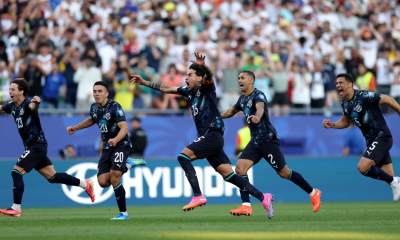
Germany crash out as Paraguay win dramatic penalty shootout to reach World Cup last 16

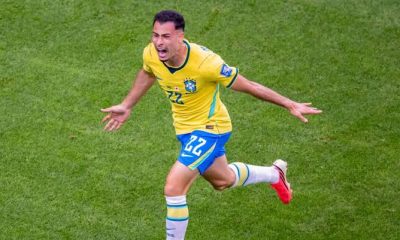
Martinelli’s last-gasp strike sends Brazil into World Cup last 16

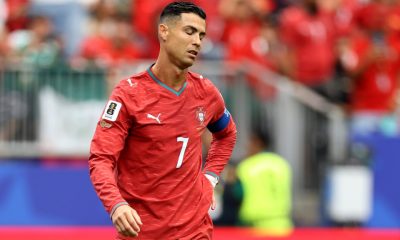
Ronaldo fails to match rivals’ World Cup heroics as Portugal held by DR Congo

Kane double and Bellingham brilliance fire England past Croatia in World Cup opener

BREAKING: Messi scores first ever world cup hat-trick to become the highest goalscorer surpassing Miroslav Klose

Haaland double powers Norway past Iraq in World Cup opener

Mbappe breaks France scoring record as Les Bleus defeat Senegal in World Cup opener

Kamada’s late heroics earn Japan draw against Netherlands in World Cup opener

Havertz scores brace as Germany put seven past World Cup debutants Curacao
