
African Football
Atlanta ’96: How Nigeria’s dream team rewrote African Football history

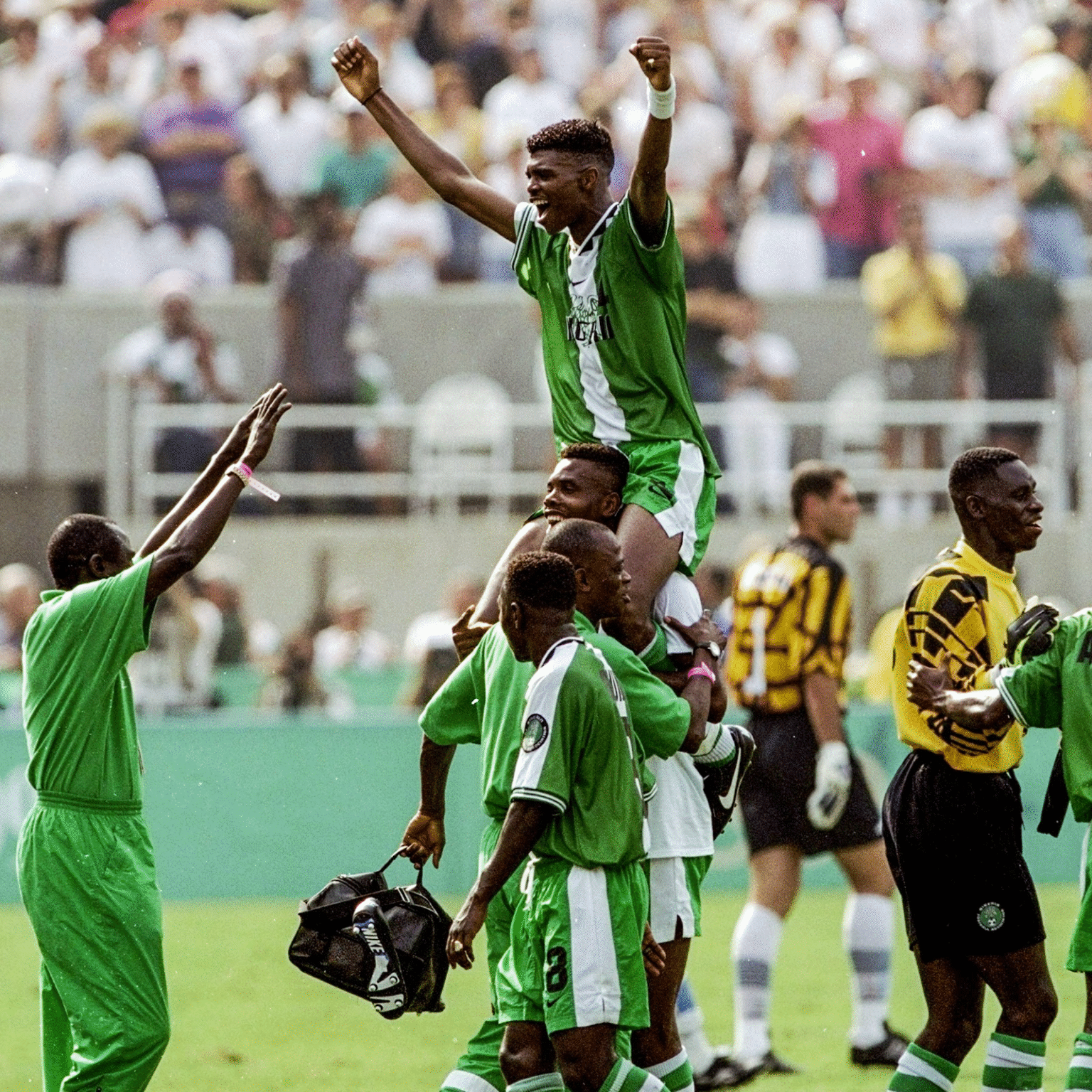
Nigeria’s unforgettable triumph at the 1996 Atlanta Olympics remains one of the greatest football stories ever told, not just in Africa, but in the world.
That “Dream Team,” as they became known, did more than win gold; they made an entire continent believe that African teams could stand tall on the global stage.
Nearly three decades later, older generations still speak with pride about that historic campaign, passing the story down to younger Nigerians who never witnessed it live.
The Rise Before the Glory
Football has always been Nigeria’s heartbeat, a source of unity, escape, and joy for millions. From the early days after independence, the Super Eagles slowly built their name in African football.
Nigeria made its AFCON debut in 1963 and gradually grew stronger, achieving third-place finishes in 1976 and 1978 before finally conquering Africa in 1980 under stars like Segun Odegbami and Christian Chukwu.
But after that golden era, the team fell into inconsistency, losing two AFCON finals to Cameroon and struggling internationally.
Everything changed in 1989 when Dutch coach Clemens Westerhof arrived with a mission to rebuild from scratch.
He scouted local talent himself, spotting raw gems like Jay-Jay Okocha, Sunday Oliseh, Daniel Amokachi, and Nwankwo Kanu, Players who would later form the core of Nigeria’s footballing golden age.
Under Westerhof, Nigeria finished second at AFCON 1990, third in 1992, and then lifted the trophy again in 1994.
That same year, the Super Eagles made their World Cup debut in the United States, dazzling the world with flair and fearlessness before bowing out narrowly to Italy in the Round of 16.
When Westerhof left, his assistant, Jo Bonfrère, picked up the mantle, and with it, the foundation of what would become the Dream Team.
Building the Dream
The 1996 Olympics came with a new rule: only players under 23 could feature, with three overaged players allowed. For Nigeria, this was perfect timing.
Most of the nation’s top stars were still young enough to qualify.
Bonfrère selected a formidable 18-man squad blending youth and experience, featuring Kanu, Okocha, Amokachi, Amuneke, Ikpeba, Babayaro, and Taribo West.
Kanu was named captain, while Amokachi, Amuneke, and Uche Okechukwu filled the overage slots.
Behind the scenes, though, chaos reigned.
The team faced poor funding, logistical mess, and shocking neglect from officials. Players had to pay for transportation, use their credit cards for team expenses, and even wash their own jerseys.
Taribo West would later recall: “We stayed in a $10 motel. Two of us shared a bed, others slept on the floor. It was madness.”
Yet, despite these struggles, their unity and determination never wavered.
Against All Odds: The Road to Olympic Gold
Drawn into a tough group with Brazil, Japan, and Hungary, Nigeria started brightly, defeating Hungary 1–0 through a Kanu strike.
They followed up with a 2–0 win over Japan before losing 1–0 to Brazil. Still, they qualified for the quarter-finals, a first in Nigeria’s Olympic football history.
In the quarters, the Dream Team outclassed Mexico 2–0 with goals from Okocha and Babayaro.
Then came the unforgettable semi-final, a rematch against Brazil.
The Nigerians were 3–1 down at halftime but refused to surrender.
Ikpeba pulled one back in the 78th minute before Kanu equalized dramatically in the final minute.
In extra time, “Papilo” struck again with a golden goal that sent the world into shock.
Nigeria 4, Brazil 3. The impossible had happened.
Four days later, they faced Argentina in the final, a team boasting names like Ortega, Simeone, and Crespo. Argentina scored first, but Babayaro’s header drew Nigeria level.
After Crespo restored Argentina’s lead from the penalty spot, substitute Amokachi leveled again. And then, in the 90th minute, Emmanuel Amuneke volleyed home from a Wilson Oruma free kick to seal a 3–2 victory.
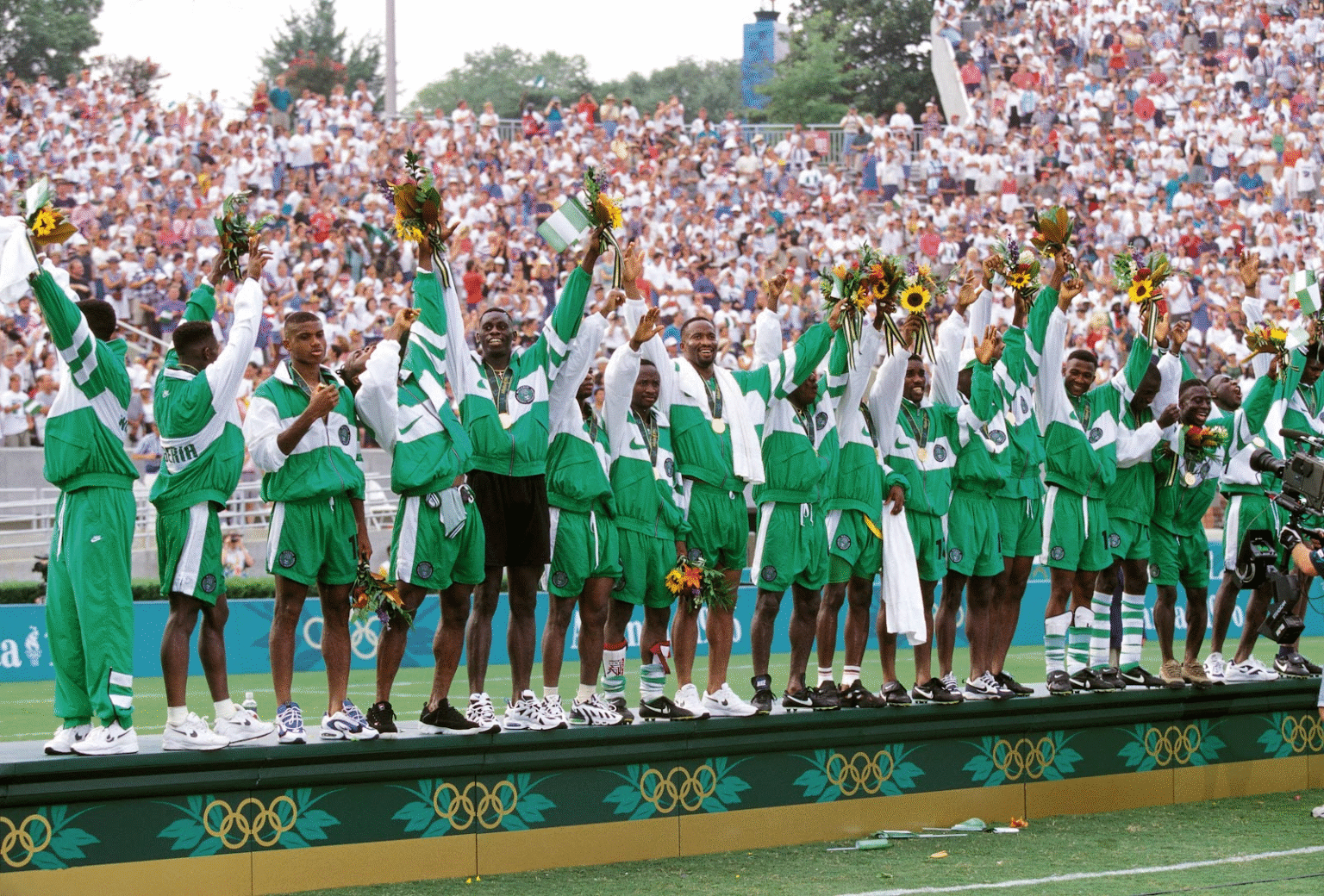
The entire continent erupted, Nigeria had just won Africa’s first Olympic football gold medal.
A Nation and a Continent Rejoice
From Lagos to Kano, Ibadan to Enugu, the celebrations were wild. Streets overflowed with jubilation. Strangers embraced like family.
Churches and mosques echoed with songs of victory. The Dream Team had brought joy, unity, and hope to millions.
Their success proved that African footballers could dominate the world’s biggest stages.
Cameroon’s Serge Branco, who later won gold at the 2000 Olympics, said: “I was 16 in 1996, and I didn’t miss a single Nigeria match. They showed us that Africans could shine globally. They gave us hope.”
The Legacy Lives On
Since Atlanta ’96, Nigeria has come close but never quite replicated that feat.
The Mikel Obi-led team won silver in Beijing 2008 and bronze in Rio 2016, making Nigeria the most successful African nation in Olympic football.
Yet, the spirit of that 1996 team remains unmatched a reminder of what belief, resilience, and unity can achieve.
Victor Ikpeba summed it up best: “Our strength was that we were a family. We had ups and downs, but we believed. That’s why we made history.”
The Dream Team didn’t just win gold; they changed the story of African football forever.




Tielemans’ extra-time penalty completes stunning Belgium comeback against Senegal

Morocco beat Netherlands on penalties to reach World Cup last 16 after dramatic comeback

Germany crash out as Paraguay win dramatic penalty shootout to reach World Cup last 16

Martinelli’s last-gasp strike sends Brazil into World Cup last 16

Ronaldo fails to match rivals’ World Cup heroics as Portugal held by DR Congo

Kane double and Bellingham brilliance fire England past Croatia in World Cup opener

BREAKING: Messi scores first ever world cup hat-trick to become the highest goalscorer surpassing Miroslav Klose

Haaland double powers Norway past Iraq in World Cup opener

Mbappe breaks France scoring record as Les Bleus defeat Senegal in World Cup opener

Kamada’s late heroics earn Japan draw against Netherlands in World Cup opener

Havertz scores brace as Germany put seven past World Cup debutants Curacao
