
African Football
Storm over AFCON final as Senegal rejects CAF’s ‘Illegal’ decision


The Senegalese government has called for an independent international investigation into alleged corruption within African football’s governing body following the Confederation of African Football’s (CAF) controversial decision to strip the country of the 2025 Africa Cup of Nations (AFCON) title and award it to Morocco, Sport360NG reports.
Senegal had secured a 1-0 victory over Morocco in January’s final, but CAF overturned the result on Tuesday after ruling that the Senegalese team forfeited the match when players walked off the pitch in protest over a stoppage-time penalty awarded to the hosts.
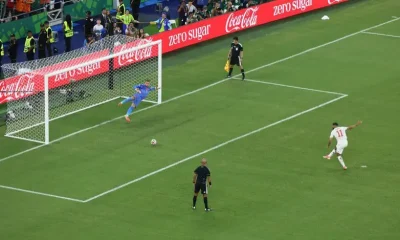
The players returned after a 17-minute delay, during which Morocco’s Brahim Diaz saw his ‘Panenka’ penalty saved, before Senegal’s Pape Gueye netted the winner in extra time. However, following an appeal by the Royal Moroccan Football Federation (FRMF), CAF ruled the match forfeited, recording it as a 3-0 win in favour of Morocco.
In a strongly worded statement, the Senegalese government described CAF’s decision as “unprecedented and exceptionally serious,” arguing it was based on a “manifestly erroneous interpretation of the regulations” and amounted to a “grossly illegal and deeply unjust decision.”
“Senegal unequivocally rejects this unjustified attempt at dispossession,” the statement added.
The Senegalese Football Federation (FSF) has confirmed it will challenge the ruling at the Court of Arbitration for Sport (CAS), describing the verdict as “unfair, unprecedented and unacceptable” and one that undermines the credibility of African football.
FSF secretary general Abdoulaye Seydou Sow insisted the federation would pursue the matter to its conclusion.
“We will stop at nothing. The law is on our side. The fight is far from over. Senegal will defend its rights to the very end,” Sow told national broadcaster RTS.
Several Senegal players have also expressed defiance, with Everton midfielder Idrissa Gueye stating that the team would not be stripped of what they achieved on the pitch.
“We know what we experienced that evening in Rabat, and no one can take that away from us,” he said.
The incident has sparked wider debate within global football, prompting the International Football Association Board (IFAB) to review rules regarding teams leaving the field of play in protest.
Senegal’s players, with the exception of Sadio Mane, walked off following referee Jean Jacques Ndala’s decision to award Morocco a penalty in the 98th minute after a VAR review of a challenge by El Hadji Malick Diouf on Diaz. The decision came shortly after a Senegal goal by Ismaila Sarr had been disallowed at the other end.
FIFA president Gianni Infantino condemned the walk-off, describing it as “unacceptable” and insisting such incidents must not be repeated.
CAF’s ruling also addressed other incidents from the final, including reducing fines imposed on Morocco over ball-boy interference and crowd misconduct. During the match, Senegal goalkeeper Edouard Mendy had his towel repeatedly taken by ball boys, while reserve goalkeeper Yehvann Diouf was reportedly manhandled during an altercation.
Former CAF disciplinary chief Raymond Hack questioned the decision, warning it could set a troubling precedent and fuel perceptions of political interference, particularly given that FRMF president Fouzi Lekjaa also serves as CAF’s first vice-president.
“The game should be won on the field of play, not in a boardroom,” Hack said, noting that the referee’s decision to allow the match to continue into extra time suggested he deemed conditions suitable to proceed.
Hack added that Morocco should have formally declared they were playing under protest if they intended to challenge the outcome, and warned that CAS proceedings could take up to six months.
While Moroccan journalist Jalal Bounar said CAF’s decision had been widely celebrated in Morocco, others across the continent have expressed concern.
Algerian journalist Maher Mezahi described the ruling as another example of inconsistent governance within African football, pointing to past CAF decisions that were later overturned by CAS.
The controversy has reignited scrutiny over refereeing standards and VAR usage during the tournament, with Senegal having previously raised concerns over their treatment and security arrangements ahead of the final in Rabat.
As the dispute heads to CAS, the final outcome of AFCON 2025 remains uncertain, with both sporting integrity and administrative credibility now under intense scrutiny.








Tielemans’ extra-time penalty completes stunning Belgium comeback against Senegal

Morocco beat Netherlands on penalties to reach World Cup last 16 after dramatic comeback

Germany crash out as Paraguay win dramatic penalty shootout to reach World Cup last 16

Martinelli’s last-gasp strike sends Brazil into World Cup last 16

Ronaldo fails to match rivals’ World Cup heroics as Portugal held by DR Congo

Kane double and Bellingham brilliance fire England past Croatia in World Cup opener

BREAKING: Messi scores first ever world cup hat-trick to become the highest goalscorer surpassing Miroslav Klose

Haaland double powers Norway past Iraq in World Cup opener

Mbappe breaks France scoring record as Les Bleus defeat Senegal in World Cup opener

Kamada’s late heroics earn Japan draw against Netherlands in World Cup opener

Havertz scores brace as Germany put seven past World Cup debutants Curacao
